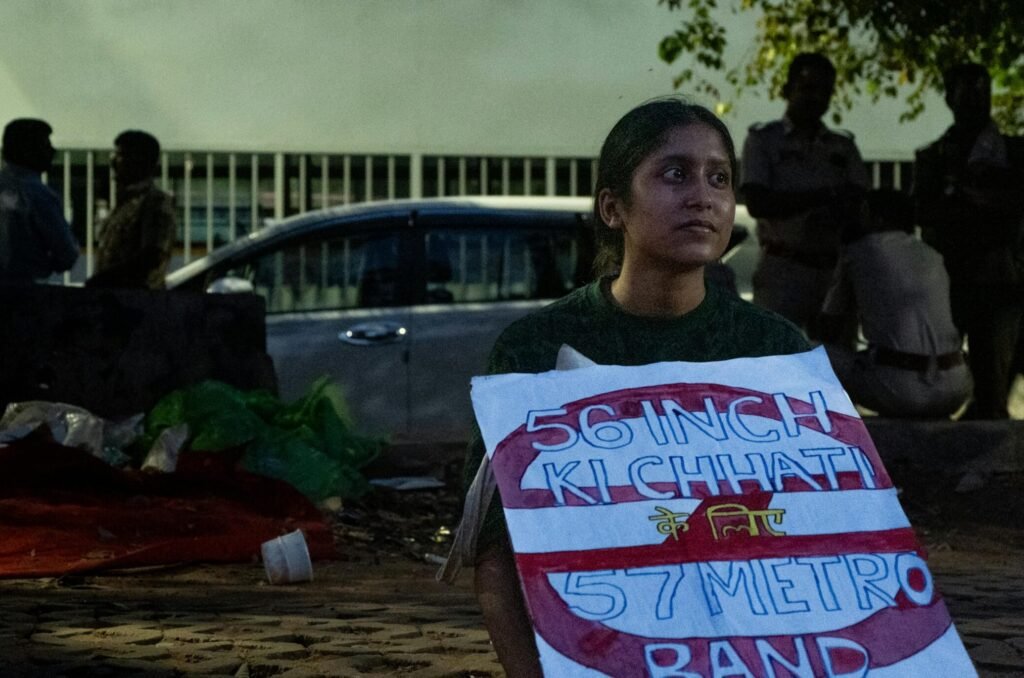
Politics Is Everywhere. Unfortunately, So Is Everyone’s Opinion.
An introduction to politics, power, and the strange business of being a citizen. Let’s begin with an uncomfortable question: when was the last time you had an opinion about something without having one hundred and seventeen people on the internet tell you that you were wrong? Now, a more uncomfortable question: how often have you formed an opinion because everyone around you seemed to have one? Welcome to politics, the world’s largest group project, in which nobody agrees on the objectives, half the participants haven’t read the instructions, and somebody’s uncle is forwarding a WhatsApp message as historical evidence. Politics is often treated as something that happens in Parliament, on television debates, or inside the heads of politicians who appear to have been professionally trained to avoid answering questions. But politics is considerably larger than that. It is about power: who has it, how they acquire it, how they use it, and who gets to decide what happens when people’s interests collide. And, whether we like it or not, politics has a rather inconvenient habit of following us everywhere. Your morning routine is political. Sorry. Consider an ordinary morning. You wake up, check your phone, and discover that the internet has manufactured three new controversies while you were sleeping. You make tea, commute to work, complain about the traffic, pay for something, and wonder why your salary seems to have developed an allergy to the end of the month. Congratulations. You have encountered politics several times before breakfast. Who controls the internet infrastructure you depend on? Who decides the quality of public transport? Why are some neighbourhoods full of parks while others have roads that resemble archaeological excavation sites? Who determines minimum wages, working hours, taxation, and access to education? These aren’t merely personal inconveniences. They are shaped by institutions, laws, public spending, economic arrangements, and decisions about whose needs deserve attention. Politics does not always announce itself with a national flag and a dramatic background score. Sometimes it looks like a pothole that has survived three monsoons and four election campaigns. The point isn’t that every minor annoyance is a political conspiracy. The point is that many personal experiences have structural causes, and understanding those causes can help us distinguish between an individual problem and a collective one. That distinction matters. If one person cannot afford a particular service, their circumstances might explain it. If millions of people cannot afford it, we should probably examine the system producing that outcome. Power: the plot twist behind everything One useful way to understand politics is to begin with power rather than political parties. Power is the ability to influence what happens. It can be exercised through laws, money, institutions, social norms, cultural expectations, or even the ability to decide which questions are worth asking. A government exercises power through legislation and administration. An employer exercises power through workplace decisions. A media organisation can influence which issues receive attention. Social groups can determine which behaviours are celebrated, discouraged, or punished. Political thinkers have disagreed for centuries about where power should reside and how it should be controlled. John Locke emphasised individual rights and government by consent. Karl Marx examined class relations and the economic structures through which power operates. B. R. Ambedkar explored caste, social democracy, constitutional safeguards, and the relationship between political equality and social inequality. Feminist thinkers have examined how power operates within families, workplaces, institutions, and everyday life. These traditions are not interchangeable, and they do not always agree. That is precisely why reading them is useful. Each asks us to look at society through a different analytical lens. Imagine a company where workers receive low wages while shareholders earn substantial returns. A liberal analysis might investigate contracts, rights, competition, and regulation. A Marxist analysis might focus on ownership, class relations, and the distribution of economic surplus. A feminist analysis might examine gendered divisions of labour, including unpaid care work. Different perspectives can reveal different parts of the same problem. The goal of political study is not to memorise a collection of fashionable labels. It is to understand what each framework explains, what evidence supports it, and where its limitations begin. Ideology: your brain’s operating system An ideology is a framework of ideas about how society works, how it should work, and what values should guide collective life. Liberalism generally places considerable emphasis on individual liberty, rights, and limits on arbitrary power. Conservatism often stresses continuity, social order, inherited institutions, and caution toward rapid change. Socialism places greater emphasis on social ownership, economic equality, or collective control over important resources, although socialist traditions differ considerably. Feminism examines gendered power and seeks to understand and challenge gender-based inequality. Communism, nationalism, environmentalism, and Ambedkarite political thought each contain their own histories, debates, and internal differences. None of these labels tells you everything about a person. Someone might support markets in one area and extensive public provision in another. A person might be socially conservative but economically interventionist. Another might support constitutional liberty while advocating substantial redistribution. Human beings, irritatingly, do not always fit into neat political spreadsheets. This is why political literacy requires more than identifying whether someone is left-wing or right-wing. It requires understanding the assumptions behind their arguments. What do they consider freedom? What do they mean by equality? What role should the state play? Which institutions do they trust? What kinds of evidence would persuade them to reconsider their position? Those questions are considerably more useful than asking someone to declare their political identity within the first thirty seconds of meeting them. India: democracy is more than election day In India, politics is particularly difficult to separate from questions of caste, religion, class, language, region, gender, and historical memory. The Constitution establishes India as a sovereign, socialist, secular, democratic republic and provides the institutional framework for representative government, fundamental rights, and constitutional accountability. But constitutional principles do not automatically eliminate social inequalities. Nor does holding elections, by itself, settle questions about how power is distributed in everyday
Politics Is Everywhere. Unfortunately, So Is Everyone’s Opinion. Read More »